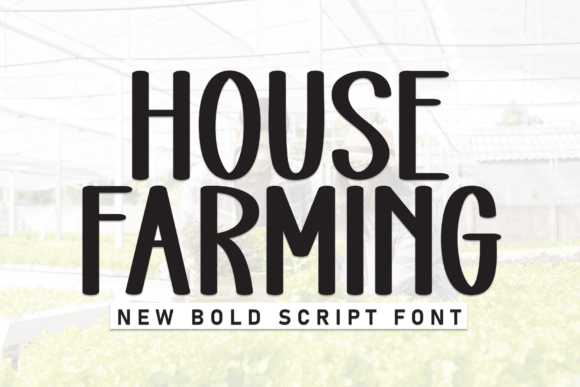
House Farming: A Unique Typeface for Modern, Laid-Back Design
When it comes to choosing the right typeface for a design project, the balance between style and readability is crucial. House Farming stands out as a clean, casual display font that offers both clarity and character. Designed with a relaxed yet modern aesthetic, House Farming brings a friendly tone to visual communication without sacrificing legibility or professionalism.
What Makes House Farming Different?
Unlike many traditional display fonts that lean heavily into ornate or bold styles, House Farming opts for a more understated approach. Its letterforms are clean and well-balanced, avoiding excessive decoration while still maintaining a distinctive personality. This makes it particularly effective in contexts where a casual, approachable tone is desired but clarity remains essential.
The font’s structure supports a wide range of applications, from branding and packaging to posters and digital headlines. It avoids the pitfalls of overly stylized fonts by maintaining consistent spacing and readable proportions, which is especially important when text needs to be quickly understood at a glance.
How House Farming Compares to Similar Fonts
Many casual or handwritten-style display fonts aim to convey a sense of warmth or informality. However, some of these alternatives can become difficult to read in longer formats or at smaller sizes. House Farming avoids this issue by combining its relaxed feel with a carefully structured design that maintains readability across different uses.
Compared to bolder, more decorative display fonts, House Farming is more versatile for mixed-use scenarios. It can work well alongside more traditional sans-serif or serif fonts without clashing, making it a good choice for projects that require a layered typographic approach. On the other hand, for highly formal or minimalist designs, other cleaner sans-serif fonts may be more appropriate.
Strengths of House Farming
- Approachable Aesthetic: Its casual tone makes it ideal for brands or messages that want to appear friendly and down-to-earth.
- High Readability: Despite its informal look, House Farming maintains legibility even in short bursts of text like headlines or labels.
- Versatile Application: Works well across print and digital media, including packaging, posters, and social media graphics.
- Playful Yet Balanced: Offers a sense of fun without veering into childish or overly whimsical territory.
Tradeoffs and Limitations
- Not Ideal for Long Text: As a display font, it’s best suited for short text rather than body copy or lengthy paragraphs.
- May Lack Formal Gravitas: In highly professional or corporate settings, House Farming might not convey the level of seriousness required.
- Context-Dependent: While versatile, its effectiveness depends on how well it aligns with the overall tone and purpose of the design.
When House Farming Is the Right Choice
Projects that aim to communicate warmth, modernity, and approachability are where House Farming truly shines. Consider using it for:
- Branding for lifestyle, wellness, or food-related businesses
- Event posters or social media content that needs to feel inviting
- Packaging design where a clean yet personable look is desired
- Headlines or banners in digital or print media that benefit from a relaxed tone
In these scenarios, House Farming helps establish a visual identity that feels current and accessible, making it easier for audiences to connect with the message.
When to Consider Alternatives
If your project requires a more formal tone or extensive use of body text, House Farming may not be the best fit. For example, editorial design, academic publishing, or legal documents typically demand fonts with more neutral or classical proportions. Similarly, if your design calls for a dramatic or highly stylized look, you might explore more expressive display fonts that push visual boundaries further than House Farming does.
Practical Comparisons and Real-World Use Cases
Imagine designing a new logo and packaging for a small-batch coffee brand. House Farming could be an excellent choice if the brand wants to emphasize a cozy, artisanal feel. Its clean lines and open spacing would ensure that the product name remains legible on shelves while conveying a sense of warmth and authenticity.
Compare that to a more angular or condensed font, which might give off a more industrial or urban vibe—potentially mismatched with the brand’s values. Alternatively, a highly stylized handwritten font could feel too loose or unprofessional, especially for a brand aiming to be taken seriously in a competitive market.
In digital design, House Farming works well for website headers or app splash screens that need to feel modern without being overly stark. It pairs nicely with simpler body fonts, allowing for a clear visual hierarchy without overwhelming the user.
Key Decision Factors
When evaluating whether House Farming is right for your project, consider the following factors:
- Target Audience: Does your audience respond to a casual, friendly tone, or do they expect something more formal?
- Application Context: Will the font be used primarily for headlines, logos, or signage rather than body text?
- Visual Harmony: How well does House Farming integrate with the rest of your design elements, including color scheme and imagery?
- Message Tone: Are you aiming to communicate approachability, modernity, and a touch of playfulness?
Final Thoughts
House Farming is a thoughtful choice for designers looking to blend clarity with a relaxed personality. It strikes a careful balance between style and function, making it a versatile option for a variety of design applications. While it may not be the best fit for every project, especially those requiring extreme formality or extended text use, its strengths lie in its ability to convey warmth and modernity without compromising readability.
As with any design decision, context is key. By understanding the unique qualities of House Farming and how it compares to other available options, you can make a more informed choice that aligns with your project’s goals and audience expectations.