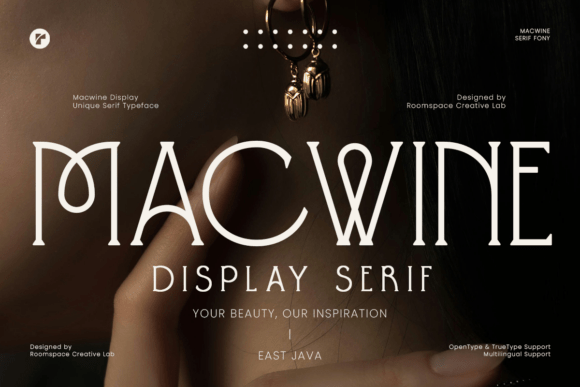
Macwine: A Sophisticated Serif for High-End Design Projects
Elegance Meets Versatility in Typography
Macwine is a refined serif display typeface that blends traditional craftsmanship with modern design sensibilities. Its carefully crafted letterforms and artistic ligatures make it a standout choice for designers seeking to elevate their visual communication. Whether used in print or digital formats, Macwine delivers a polished aesthetic that aligns with luxury branding, editorial design, and creative packaging solutions.
Distinctive Features That Set It Apart
One of Macwine’s most notable characteristics is its unique ligature set, which adds a layer of sophistication to typographic compositions. These ligatures are not merely decorative—they enhance readability and visual flow, particularly in titles and short texts. The font’s structure balances delicacy with bold presence, allowing it to command attention without overwhelming a layout.
Designed with both form and function in mind, Macwine supports multiple languages, making it suitable for international design projects. The inclusion of PUA encoding ensures that all extended characters and ligatures are accessible through standard font viewers, streamlining the workflow for designers working across platforms.
Practical Applications Across Design Disciplines
This typeface excels in contexts where elegance and clarity are paramount. For instance, Macwine is an excellent fit for:
- Luxury brand identities
- Wedding invitations and stationery
- Magazine covers and editorial headers
- Packaging design for premium products
- Creative social media assets
In logo design, the font’s strong visual presence helps establish a memorable brand tone. When applied to editorial layouts, its legibility at larger sizes ensures that headlines remain impactful without sacrificing readability.
Performance in Real-World Design Scenarios
From a practical standpoint, Macwine holds up well in both screen and print environments. Its refined serifs remain crisp at high resolutions, while the font’s contrast and spacing contribute to a balanced appearance on digital displays. Designers working on brand guidelines will appreciate the consistency across weights and styles, ensuring cohesive application across different media.
That said, Macwine is best suited for display use rather than body text. Its ornamental qualities, while visually appealing, may reduce legibility in longer paragraphs. As such, it’s most effective when used for headlines, subheaders, and accent text rather than extended reading material.
Who Benefits Most from Using Macwine?
Professionals in branding, editorial design, and packaging will find Macwine particularly valuable. Entrepreneurs launching premium product lines can leverage the font to communicate sophistication and exclusivity. Similarly, wedding designers and invitation specialists will appreciate its romantic, timeless appeal.
Creative freelancers and agencies working on high-end client projects can integrate Macwine into their design toolkit to offer refined typographic solutions. Bloggers and content creators focused on lifestyle, fashion, or luxury niches may also benefit from incorporating the font into social media visuals and branded graphics.
Considerations for Workflow Integration
When adopting Macwine into a design workflow, it’s important to evaluate compatibility with existing tools and project requirements. The font’s PUA encoding simplifies access to special characters, but designers should verify that their software supports custom glyph sets. Additionally, because Macwine is a display font, it should be used thoughtfully to maintain visual hierarchy and readability.
For best results, pair Macwine with clean sans-serif fonts in supporting text to create contrast and balance. This approach ensures that headlines remain striking while secondary content remains easy to read and visually aligned.
Final Thoughts: Is Macwine Worth the Investment?
For designers seeking a serif typeface that bridges classic elegance with modern utility, Macwine offers a compelling combination of aesthetics and functionality. Its artistic ligatures, multilingual support, and cross-platform accessibility make it a versatile asset for a range of creative applications.
While it may not be the ideal choice for every project—particularly those requiring extensive body text—its strengths in branding, editorial, and packaging contexts are clear. When used appropriately, Macwine enhances visual storytelling and reinforces a premium design sensibility. For professionals who regularly work on luxury or editorial-driven projects, investing in Macwine can provide long-term value and creative flexibility.